Rule 9 Explained: When Your Ball Moves at Rest

Ask a group of club golfers what happens when a ball wobbles and rolls a few inches after address, and you'll likely get five different answers. It's one of the most frequently misunderstood situations on the course, and it comes up more often than most players realize, especially on breezy days, sloped greens, or in the rough where a ball is delicately balanced. There's no single high-profile incident behind this piece, just a rules question that keeps resurfacing at clubs everywhere. So what does the rulebook actually say?
The relevant rule is Rule 9: The Ball at Rest, which deals specifically with what to do if your ball moves after you've already put it into play. Understanding this rule well can save you strokes, arguments, and awkward moments with your playing partners.
What Counts as a Ball Moving
Before anything else, it helps to know the definition of Ball moved. A ball is only considered to have moved if it visibly shifts from its original spot and comes to rest in a new location, whether that's just a fraction of an inch or several feet away. If it merely oscillates and settles back in the same place, it hasn't moved under the Rules, even if you saw it wiggle.
This distinction matters because Rule 9 only kicks in once a ball is officially in play. That means the rule applies from the moment you've made a stroke from the teeing area, as covered in the concept of Ball in play, right through to the moment it's holed out.
Who Caused It to Move?
The heart of Rule 9 is determining the cause of the movement, because the answer decides whether there's a penalty at all. Broadly, there are two categories.
- Natural forces caused it: wind, water, gravity, or the ball simply settling further into its lie. In this case, there's no penalty. You play the ball from its new position, wherever that happens to be.
- A player, caddie, or equipment caused it: if you, your caddie, or your gear are responsible, even accidentally, there's normally a one-stroke penalty, and the ball must be replaced on its original spot.
This second category trips people up the most. Many golfers assume that if they didn't mean to move the ball, no penalty applies. That's not how Rule 9 works. Intent isn't the deciding factor, cause is. If you accidentally kick your ball while searching for it in deep rough, or your practice swing clips a twig that sets the ball rolling, the penalty still applies because you caused the movement, even unintentionally.
There are a few important exceptions. If your ball moves while you're taking relief, searching for a ball buried under leaves, or in the process of legitimately marking, lifting, or cleaning it under Rule 14, there's no penalty, and you simply place it back or continue the relief procedure as normal.
Replacing the Ball Correctly
When a penalty does apply and the ball must go back, precision matters. The ball needs to be replaced on the exact original spot, not simply dropped nearby. If you can't be sure of the original spot, you're expected to use your best judgment to estimate it as accurately as possible.
Getting this wrong carries its own consequences. Playing from a location that isn't the correct spot can trigger the concept of Wrong place, which in stroke play can escalate into the General penalty of two strokes if not corrected before you complete the hole. In other words, a small one-stroke situation can snowball into something much costlier if the replacement isn't handled properly.
Why This Rule Trips People Up
Part of the confusion comes from old habits. Under earlier versions of the Rules, some of these situations were treated differently, and many golfers still play by muscle memory rather than the current text. The modern approach under Rule 9 tries to be more forgiving in genuinely natural situations, like a ball rolling due to wind on a sloped green, while still holding players accountable when their own actions, even accidental ones, are the cause.
If you want to build real confidence here, it helps to study the topic alongside related rules on marking and dropping, which together make up much of the Playing Your Ball module.

All rules, practice exams and an AI Coach with photo recognition. Free to download.
Practical Takeaways for Your Next Round
- Before addressing your ball on a slope or in the wind, pause and consider whether it looks unstable. If it moves before your stroke, the cause determines the penalty, not your intention.
- If your ball moves and you're unsure why, calmly reconstruct the sequence of events with your playing partners before deciding on the ruling.
- Always mark your ball's position with a tee or Ball-marker whenever there's a chance you'll need to identify its exact original spot later.
- When in doubt about whether a penalty applies, play a provisional continuation under protest and sort it out with your marker or the Committee once you're off the green, rather than guessing under pressure.
Rule 9 rewards players who stay observant and honest about cause and effect. Knowing the difference between what nature did and what you did is often the simplest way to avoid an unnecessary stroke, or an unnecessary argument, the next time your ball decides to move on its own.
Rules in this article
Also read

What Pro Golf Rulings Teach Club Golfers
Recent tournament rulings on bunkers, provisional balls, and relief highlight Rules of Golf lessons every club golfer should know before their next round.
Read more
Embedded Ball Relief: What Rule 16 Really Allows
A club rules dispute over a plugged fairway lie highlights how embedded ball relief actually works under Rule 16, and how to drop correctly.
Read more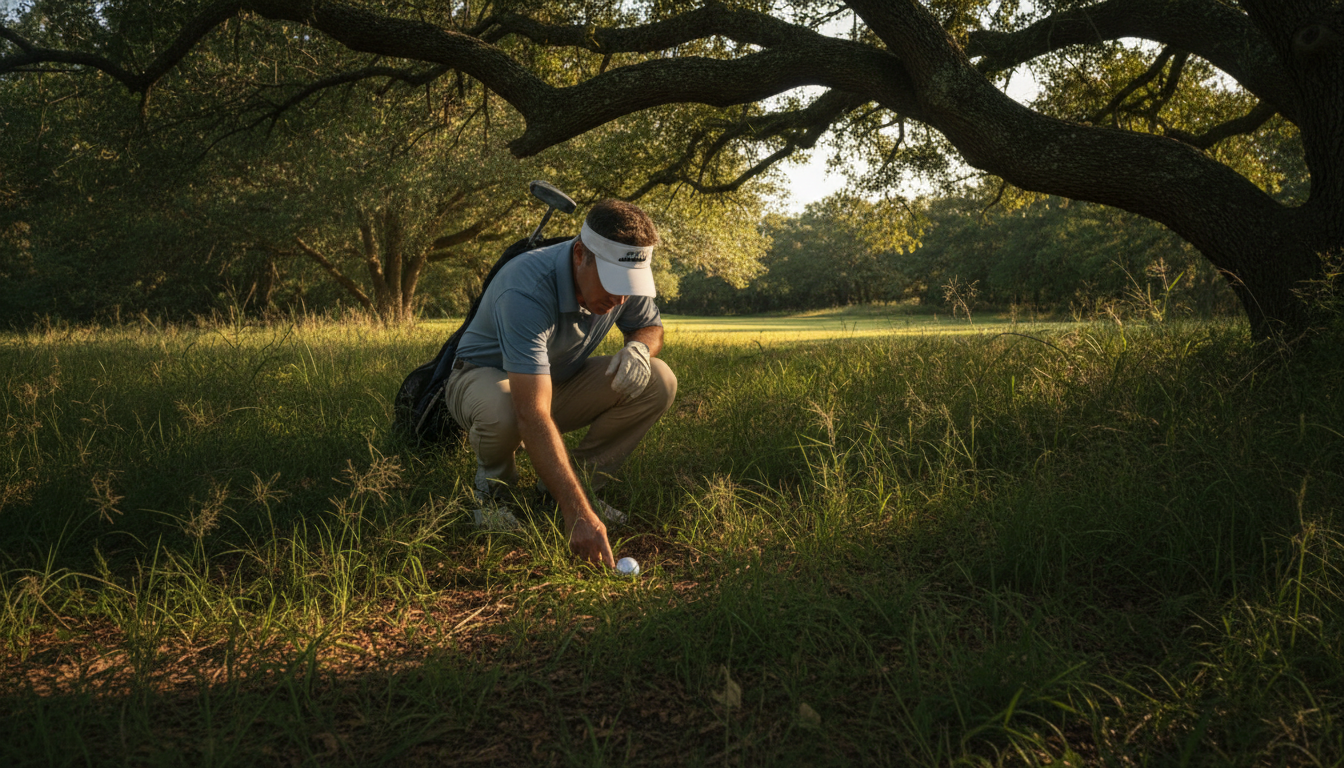
Unplayable Ball Calls: What the Rules Really Say
A tricky lie in the trees during a big tournament puts the unplayable ball rule in the spotlight. Here's what club golfers need to know before their next round.
Read more